Rahim at a glance
For the colleague who was forwarded this link and has not met him.
- Author of SuperSkillsKogan Page, 2026. Translations sold in Vietnamese and Portuguese, 13 further languages under review, audiobook due Q1 2027.
- Built the thing he now studiesFounder of EtonX, acquired by Eton College. Led Quizlet's international expansion across 60+ countries as the platform grew past 100 million users.
- On stage worldwideNorth America, Asia, Europe, the UK and the Gulf. The named engagements are listed on the speaking record.
- Built on graded evidenceEvery argument in the talk is published, with the source graded and what it does not support stated alongside what it does. The evidence base.
- Clients includeGoogle, Barclays, Kaplan, Echo360, Next 15, Trainline
- Seven years of researchOn AI and human capability, published and graded in the open
- Box of AmazingHis weekly letter, since 2017
- FeesMost conference keynotes come in around £10,000. What moves it: the time I commit, travel, how full the diary is that month, and how far the talk is built for your room. Detail
- London-basedAvailable globally. Recently Istanbul, Dubai, Singapore, Madrid and Canada.
Which talk are you booking?
Each runs 30 to 90 minutes, in person or virtual, tailored to your organisation, with optional Q&A and breakout facilitation and a 30-minute main-stage version for conferences. The case for each is on the keynotes page.
- Drift versus DesignExecutive teams, boards, leadership offsites
- We Are SuperheroesWhole organisations, cross-sector conferences, education
- WTH (What the Human)Boards and annual conferences. Available December to March only.
- In conversationRahim on stage with your CEO, chair or host, 30 to 45 minutes
- Built to your briefNeeds a call and some lead time
Where he speaks, with the local brief for each: London and the UK · Europe · the Middle East and the Gulf · Asia · North America.
Watch him speak
Two minutes, drawn from keynotes for leadership teams and conferences.
“We are pretty selective about the speakers we put in front of our audience. Rahim was a standout speaker. He told our audience something they did not especially want to hear.”
Rebecca McKinlay, Managing Director, Oystercatchers
What a sixty-minute keynote actually contains
So you can see where it sits against your run of show, and where the energy in the room will be.
- First ten minutes. A story, and no mention of AI. The room settles and stops expecting a technology talk.
- Ten to twenty-five. The evidence. What is actually measured about what AI does to human capability, including the parts that cut against the argument.
- Twenty-five to forty. The turn. Where the comfortable reading of that evidence stops working, and what follows for the people in the room.
- Forty to fifty-five. What to do, stated as decisions rather than principles, at the altitude the audience actually operates at.
- Last five. One thing to do this week.
If your programme needs the energy peak in a particular place, say so and the shape moves.
Keynotes run 30 to 90 minutes, in person or virtual. A 30-minute main-stage version of each talk is available for conferences, and the full talk runs 45 to 60 minutes.
Drift versus Design: why most organisations hand their judgement to AI without deciding to, and how to design your way through instead.
Most organisations are adopting AI by drift: a thousand reasonable decisions that add up to judgement nobody chose to give away. Rahim Hirji, author of SuperSkills, shows leaders which mode they are running, where AI sharpens judgement and where it weakens it, and hands them the controls.
We Are Superheroes: AI is the suit. The human decides.
AI makes everyone faster, stronger and more capable. It does not decide; people do. Through a family story across four generations and three continents, Rahim Hirji hands the audience the seven human skills that grow more valuable as the tools spread. They arrive thinking AI is the story and leave knowing they are.
WTH (What the Human): a live test of a board's own judgement.
Most boards have never seen their own judgement on AI tested. In three acts, Rahim Hirji shows a board what AI is changing in how organisations run, then ends with a live test of the board's own judgement, in the room and in real time. Nobody forgets the result.
Two weeks before the talk, your audience answers five anonymous questions in about two minutes: where they already let AI decide, and what they would no longer catch if it were wrong. Their answers shape the talk, so the examples on screen are theirs. Afterwards you get a one-page readout: where your room sits between drift and design, and the three decisions to look at first. It comes as standard with Drift versus Design, and on request with the other keynotes.
What organisers say about working with him
“We brought Rahim in to speak to our teams in the Corporate Bank about what AI actually changes for the people doing the work. He handled a demanding room and left them with something they could act on rather than only something to think about.”
Stuart Foster, Head of Coverage, UK Corporate Banking, Barclays
“So thought-provoking and so well presented. It set up our board day perfectly.”
Sam Knights, CEO, Next 15 Group plc
“I wanted something that would make sense of AI for them without the hype and without the fear. Rahim started with the human rather than the technology, and that reframing was the thing. He made AI feel simple and made us feel capable, which is not a combination I have come across before.”
Azmina Kara, Founder, Luminary, HR and people leaders, September 2026
Send an enquiry, or email rahim@thesuperskills.com with the room and the date. A reply within 24 hours.
Download what you need
Sorted by the job you arrived with.
- Send internallyThe one-page PDF, built for forwarding.
- Programme copy25, 60 and 150-word bios
- Introduce Rahim30-second host introduction, with the pronunciation
- Promote the eventApproved photographs and book cover
- Brief your AV teamTechnical requirements
- EverythingPhoto archive plus this page, which is the definitive operational source.
Where this keynote works best
The argument does most when:
- The people in the room have some authority over their own work. The talk asks them to decide which repetitions are worth keeping, and that needs someone who can act on the answer.
- The organisation is actually wrestling with AI rather than announcing a conclusion it has already reached.
- There is time for the argument to develop. Thirty minutes is the floor; the turn needs setting up.
- The interest is in judgement, capability and work rather than in implementation architecture.
- It is not immediately after a vendor pitch. Order matters more than programmes usually assume.
If the decision is already made, the audience has no agency or the slot is too short, we will say so, and either reshape the session or recommend somebody else.
Five questions he will ask you
Have these ready and one short call replaces four emails. Rough answers are fine; half of them get settled in the call.
- Date and time. Including where in the day you are putting it. A keynote at 9am behaves differently from one at 4pm.
- How long. The slot as programmed, and whether questions are inside it or after it.
- The shape of the room. Theatre, cabaret, boardroom, standing, or a ballroom with a hundred and fifty tables. This changes the talk more than most organisers expect.
- What you want the session to do. What should be different in the organisation afterwards, rather than the theme.
- Who is in the audience, and at what level. Seniority, function, and how much authority they have over their own work.
Bios, at three lengths
All three approved as written. Please do not merge them into a fourth, because the short ones are short on purpose.
Twenty-five words
Rahim Hirji is the author of SuperSkills and writes Box of Amazing. He speaks on AI, work, and what people must stay capable of doing themselves.
Sixty words, for a programme
Rahim Hirji spent twenty years building the technology that changed how people work, then seven studying what it did to them. He is the author of SuperSkills: The Seven Human Skills for the Age of AI (Kogan Page, 2026), an advisor to boards and leadership teams, and since 2017 the writer behind Box of Amazing. He has worked with more than 200 organisations across 30 countries.
A hundred and fifty words, for a press release
Rahim Hirji helps leaders and organisations decide what people must remain capable of doing as AI becomes more capable. He spent twenty years building the technology that changed how people work, and the seven years since studying what it did to them.
He is the author of SuperSkills (Kogan Page, 2026), founder of The SuperSkills Intelligence Company, and the writer behind Box of Amazing, a weekly letter running since 2017 and now read by more than 25,000 people. His research maps 1323 questions about AI and human capability against the evidence that bears on each one, and states plainly which remain unanswered.
He has worked with more than 200 organisations across 30 countries and six continents, and speaks to boards, HR and CHRO audiences, corporate main stages, and schools and universities.
An introduction your host can read aloud
Thirty seconds, written to be spoken. No rehearsal needed. Pronounced Raa-heem Her-jee.
“Our next speaker spent twenty years building the technology that changed how we all work. Then he spent seven years looking at what it did to the people using it.
He is the author of SuperSkills, he writes a weekly letter read by twenty-five thousand people, and he has an unusual habit for someone in this field: he publishes the questions he cannot answer alongside the ones he can.
Please welcome Rahim Hirji.”
Photographs
Three photographs, cleared for programmes, event pages and social posts promoting the engagement. Others, including main-stage and full-room shots, on request.

PortraitPlain background. The default for programmes and holding slides. Download 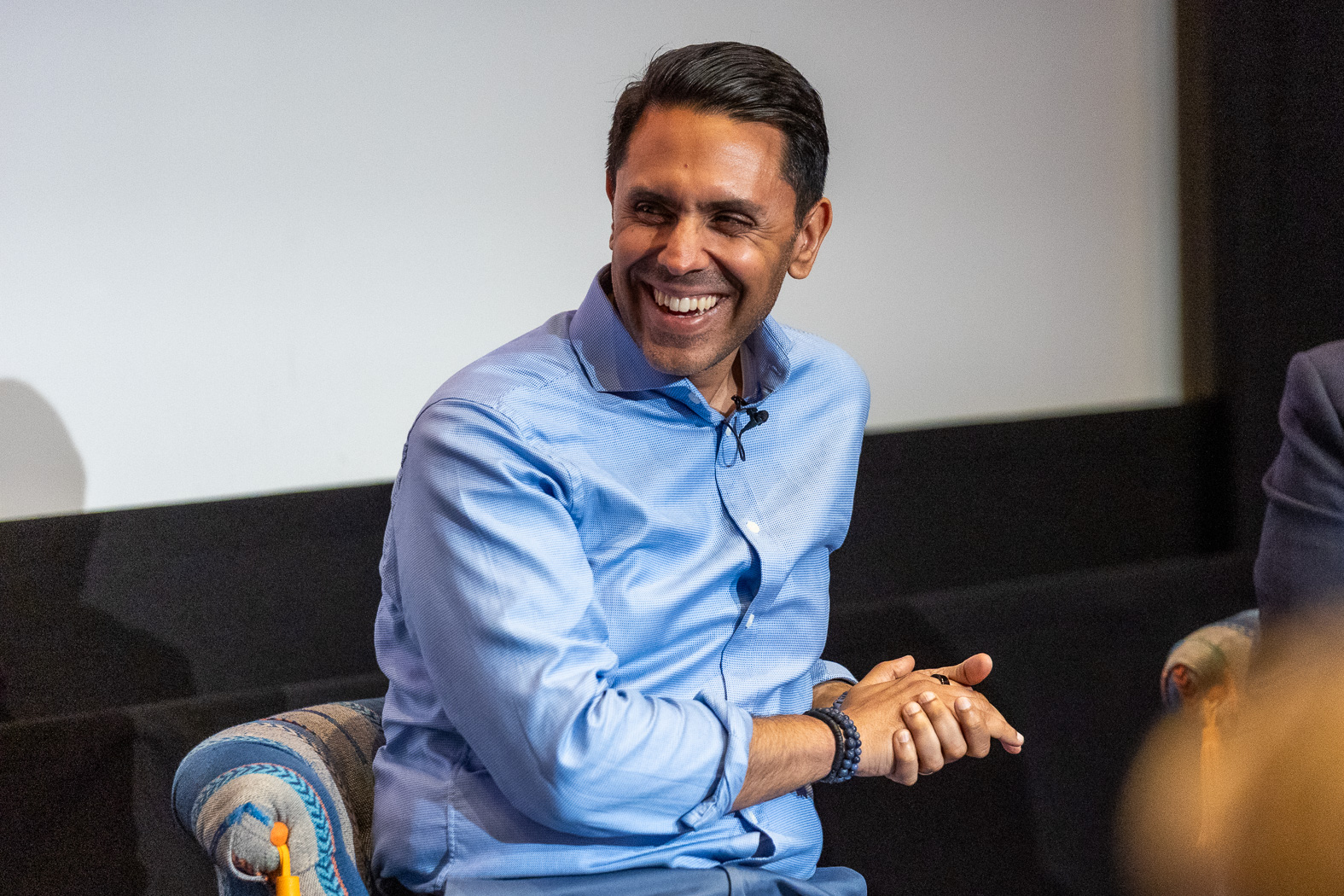
On a panel, Oystercatchers LondonHim in a room rather than on a stage. Best for event pages and social. Download 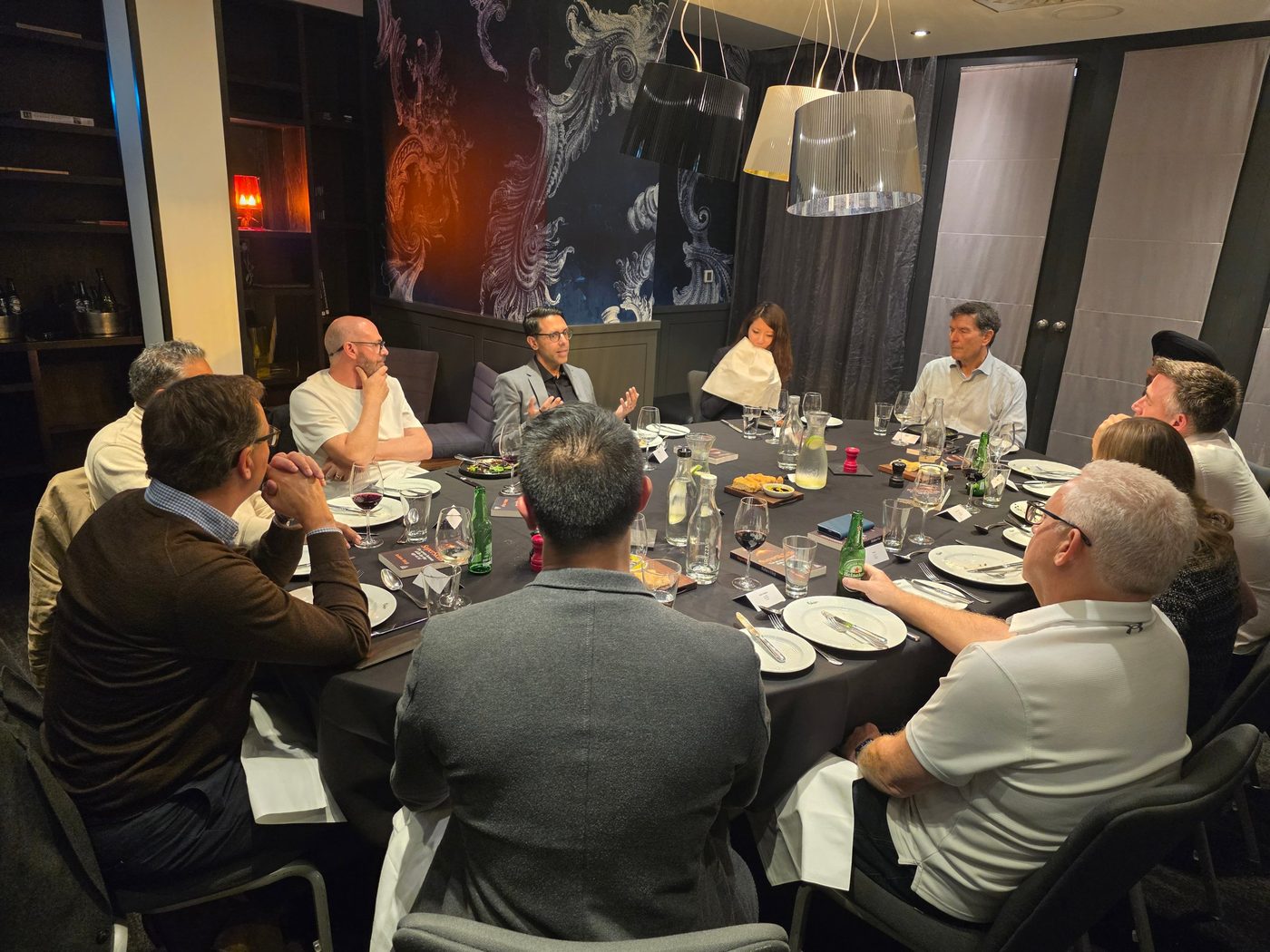
At a leaders' dinner, LondonA talk at the table, no slides. Best for dinners, board evenings and private events. Download 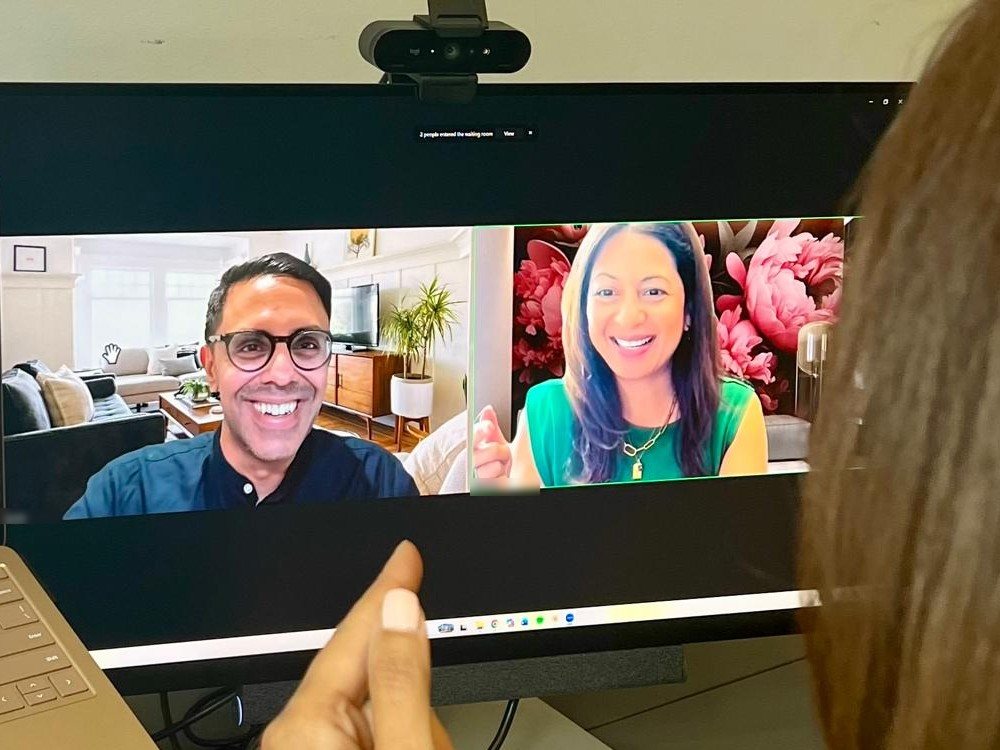
Online, liveOn screen in a live session. Best for webinar listings and virtual events. Download 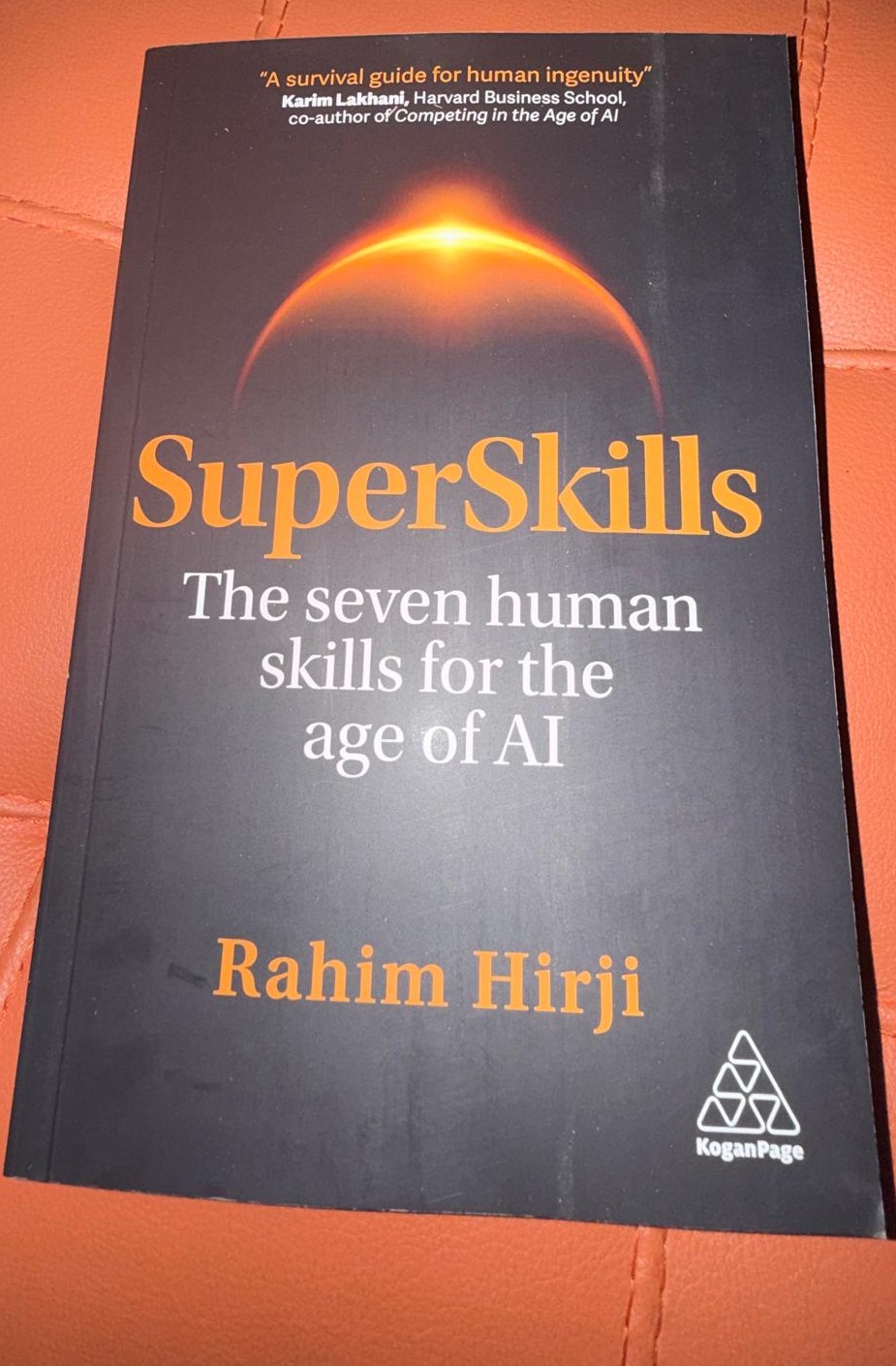
Book coverFor programmes, and anything tied to a signing. Download
Download all three as a zip. Higher resolution on request.
Running the event
Everything operational, opened when you need it.
What the room needs to provide (AV)
Rahim presents from his own laptop using his own slides.
- A display connection. HDMI is easiest; he travels with his own adapters.
- A microphone. Handheld or lapel, whichever is simpler for your AV team.
- A clicker, ideally, so he can move away from the lectern.
- A confidence monitor if available, or any arrangement that lets him see the slide without turning round. If neither is possible, say so in advance.
That is the whole list. No specific lectern, no minimum stage size, no request to be the only speaker in the session.
Formats, lead times and how long each needs
Lead time. Six to twelve weeks is usually enough for a UK date; three to six months for international in person. Shorter lead times are often possible for virtual, and sometimes for in person where the diary is free and the talk already exists in the form you need.
- Keynote, 45 to 60 minutes, or 30 for a main stage. Up to 90 with questions; longer than that rarely improves it.
- Keynote with Q&A, 60 to 90. The questions are usually the better half.
- Fireside or in conversation, 30 to 45.
- Panel. Happy to sit on one or to chair it.
- Workshop or leadership session, half or full day. A different commission from a talk, prepared and priced differently.
Book signings welcome where the event has bought copies; your bookseller or Kogan Page will arrange them, usually on sale or return.
Online and hybrid
- Delivered from a proper set-up: wired connection, decent camera and lighting, a second screen for the audience.
- Any platform you already use.
- A technical run-through beforehand, always, at no extra charge. Fifteen minutes on the actual platform prevents almost every problem that ruins an online session.
- Forty minutes online is closer in weight to sixty in a room. Plan accordingly.
- Hybrid needs a decision rather than a compromise: tell us which audience is the primary one.
Before the event, and what you will be asked
One call, thirty minutes, three to six weeks out. That is all the tailoring requires. The questions:
- Who is in the room, by seniority and function, and how many.
- What they already believe about AI, and whether they agree with each other.
- What your organisation is currently arguing about internally on this subject.
- What has already been said to this audience that this must not repeat.
- What you want them doing differently in a month, as a behaviour rather than a feeling.
- Who in the room would most like the session not to happen, and why.
The last one is not mischief. Knowing where the resistance sits is what stops a talk being pitched at the wrong altitude. An anonymised pre-event survey can also be run: five questions, no personal data captured, results shared with you.
Slides, recording and filming
- He presents from his own laptop. Slides through the venue machine go wrong often enough to be firm about.
- A PDF holding slide is available in advance if you need something for the master deck. The live deck is not.
- Afterwards, a PDF for internal use. Circulate it inside your organisation as widely as you like. It may not go outside, be posted publicly, or be passed to a third party.
- No editable files. PDF only.
- Recording: yes, at no extra cost. Internal use unrestricted and perpetual.
- External or public use needs one email first. The answer is usually yes with a condition about context.
- Q&A can be excluded from the recording, and often should be.
- Tell the audience they are being filmed in the joining instructions, and give them a way to opt out of appearing.
On the day
- Arrival at least an hour before, and a technical check as soon as the room is free.
- Happy to sit through the session before his; it is usually the difference between a talk that fits the day and one written somewhere else.
- Meet and greets, receptions and dinners all fine. Say so in advance so travel is planned around them.
- What he needs from you: the run of show, who is on before and after, and any internal context the room will be carrying that day.
What would be useful back from you
Not a condition of anything, but hard for a speaker to obtain and easy for a host to provide.
- A copy of the recording, in whatever quality you have. Footage of a real room is the hardest asset for a speaker to get hold of.
- Two or three photographs, ideally one wide enough to show the audience.
- Permission to name you as a client. If that needs comms sign-off, say so and nothing is published until it is given. If the answer is no, nothing appears anywhere.
- Two lines about whether it worked, attributable.
Contracting and procurement
The part your finance team will ask for. Opened when it matters.
Fees
Most conference keynotes come in around £10,000. Four things move it: the time I commit, travel, how much competition there is for the diary that month, and how far the talk is built for your room. A bespoke session costs more because it does more for the people in it. Shorter slots, repeat bookings, charities and virtual sessions sit under the median; international travel and new research for your sector sit above it. Tell me the room and the date and you have a number within 24 hours.
Advisory starts from £5,000. Assignments are scoped one at a time and most are five-figure; a retainer is monthly, from £5,000 a month, and I take on no more than a handful at once. Schools, universities and charities are quoted differently.
Travel, accommodation and who books what
One rule: outside London, you book the travel and you pay for it. Your rates are better than his, your finance team is not chasing a reimbursement three months later, and nobody is out of pocket for a long-haul fare while waiting to be paid.
- London. Nothing at all. No travel, no accommodation, no expenses.
- Elsewhere in the UK. You book and pay the transport, plus a room the night before where the timing means an early start.
- Overseas. You book and pay the flights. Arrival the night before, always. Coach under five hours, economy plus from five, business from eight. Fares are quoted from London Heathrow unless something else is agreed in writing.
- Accommodation. Standard room, bed and breakfast, at or near the venue. Normally two nights overseas.
- If your process cannot book on his behalf, he will book it and invoice at cost before travel rather than after the event, with the itinerary sent for approval first.
- Only incidentals are reimbursed: airport transfers, visas, the things nobody can book in advance. At cost, with receipts, invoiced with the fee. No per diem, no markup.
If your organisation has a standard travel policy, send it. In almost every case it is accepted as written.
Payment terms and invoicing
- Fifty per cent on booking, which secures the date, and fifty on the day. Inside two weeks, the full fee on booking.
- Card payments accepted, in whatever split you need. Several clients use this to route around their own purchase-order process.
- If your procurement cannot do that, say so early. Purchase-order processes usually cannot, and a sensible variation is almost always agreed.
- Purchase orders are quoted on the invoice. Please raise it before the event; it is the most common cause of late payment.
- Tell us the exact legal entity to bill. Accounts payable systems reject rather than query.
Company details, registration number, registered address, VAT status and bank details are sent on request, on letterhead, in one message, so your supplier portal takes ten minutes rather than three weeks. One thing worth knowing: if you ever receive an email saying his bank details have changed, it did not come from him. That is a common fraud against event suppliers and their clients. Telephone to check before paying anything.
Contract, cancellation and intellectual property
The contract. Whichever is less work for you: your own services agreement, usually signed as written, or a one-page letter of engagement covering date, fee, format and cancellation. Electronic signature is fine.
Cancellation. Cancel more than two weeks out and the deposit is retained, with nothing further owed; inside two weeks the full fee stands. Postponement is not cancellation: move once within twelve months and the deposit moves with it. If he cancels, everything paid is returned and help finding a replacement comes with it. Committed travel costs are payable either way.
Intellectual property. The frameworks, research and material remain his; your organisation receives an unrestricted licence to use the recording and content internally, indefinitely. That clause is the only thing routinely added to a client contract and has not yet been refused.
Compliance and paperwork
- Tax forms. W-8BEN for United States payers and equivalent residency documentation elsewhere, completed on request. Ask at contracting rather than invoicing to avoid a delay of weeks.
- Non-disclosure agreements signed where a session touches confidential strategy, which is often.
- Passport, visa and security clearance details provided through a secure channel where travel or site access requires them. Never over ordinary email, and be wary of anyone who agrees to.
- Insurance, DBS and safeguarding requirements vary by organisation. Tell us what your policy needs at the contracting stage and it will be in place before the date.
What will be declined
Rarely about the sector, almost always about the brief.
- A conclusion decided before the session. If the answer the room must reach is already in the brief, the session is a performance of deliberation.
- Cover for a decision already taken, so a restructure or a purchase can be described afterwards as externally validated.
- A brief that requires arguing against the research. Disagreeing with the argument is welcome; abandoning it in the room is not.
- Approval rights over what may be said. Reviewing slides for accuracy, confidentiality or brand fit is normal and welcome.
- A room that has not been told why it is there.
None of this is a comment on any organisation that has asked. Every one came from a brief rather than a name, and in most cases a conversation resolved it.
Enquire
Five things, and you will usually have an answer the same day.
- The date, the city and the venue.
- Who is in the room, and roughly how many.
- The slot length, and what comes immediately before and after it.
- What you need the audience to think or do differently afterwards.
- Whether this is a keynote, a fireside, a workshop, or something without a name yet.
Send an enquiryBook a 30-minute call
If a date is already in the diary and you would rather talk it through, take the call. See also the keynotes, press and podcasts, and the research the talks are drawn from.
Send an enquiry, or email rahim@thesuperskills.com with the room and the date. A reply within 24 hours.
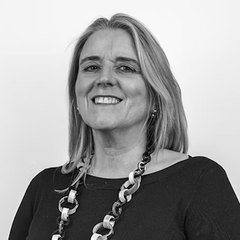 Charlotte Wanendeya, Head of Law, BPP University Law School. Booked a keynote and panel for law students.