Front cover of SuperSkills: The Seven Human Skills for the Age of AI by Rahim Hirji
The book · Out now

SuperSkills

The seven human skills for the age of AI

Published by Kogan Page, part of Hachette UK · 2026

Most organisations drift into AI. The best design it. The seven human capabilities that decide which one you are, and how to build them.

"A survival guide for human ingenuity."Karim Lakhani · Harvard Business School
Rights soldfour deals: Vietnamese and Portuguese translations, two summary editions; 13 languages under review
200 organisationsseven years of research behind it
Kogan Pagepart of Hachette UK

“A survival guide for human ingenuity. Rahim maps the exact capabilities we need to partner with machines without surrendering our authorship.”

KARIM LAKHANI · Harvard Business School · co-author of Competing in the Age of AI
The idea

AI is not coming for your job. It is coming for your judgement.

It does not begin with a reckless decision. It begins with a sequence of small ones never quite made, until the capability has moved and nobody remembers deciding to. Rahim Hirji calls it drift.

SuperSkills is the answer to it: a field guide to seven human capabilities that grow more valuable as the tools spread, built on seven years of research across more than 200 organisations and carried by a family story across four generations and three continents. Part warning and part route forward, it argues that what comes next is not the birth of something new but an evolution of the skills we have always used to adapt, now built on purpose rather than by accident.

SuperSkills (Kogan Page, 2026) sets out seven human capabilities, built on seven years of research across more than 200 organisations in over 30 countries.

From the book

“Every day, intelligent systems make thousands of small decisions on our behalf. Each one feels minor. Together, they represent a transfer of authorship over our own lives.”

“SuperSkills is about what happens next. Not to jobs. To judgement.”

RAHIM HIRJI · from the introduction
Watch

Two films about why this book exists.

The documentary

Four minutes on why the book exists, told through three of its stories: a mother in Minneapolis, the women who changed how Sierra Leone buried its dead during Ebola, and a wooden boat out of Gujarat. No robots, no neon, no glowing brains.

Watch on its own page, with the full transcript

The trailer

Two minutes of choices, one after another, ending on the one the book is about. Choose design over drift.

Watch on its own page, with the full transcript

Who it is for

Written for leaders, and the teams they build.

A book to read together, not alone. The organisations that thrive do not just adopt AI. They build human capability on purpose, across the whole team. Each of those groups has a version of the talk built for it: boards and leadership offsites, HR and CHRO conferences, schools and education, and early careers and graduate talent.

Leadership teams & boards

Executives deciding where human judgement stays as AI reshapes the work, and how to prove it.

People & HR leadership

Chief people officers, chief HR officers and their teams, building capability that changes behaviour across the organisation, not slideware.

Anyone staying valuable

Individuals who want to grow more original and more useful as the tools spread, not more replaceable.

Copies of SuperSkills by Rahim Hirji
What is inside

The seven SuperSkills

The human capabilities the machines make more valuable, not less.

01

Curiosity

Noticing what the machine misses, and asking the better question.

02

Change Readiness

Turning disruption into advantage instead of drifting through it.

03

Big Picture Thinking

Reading where the work is heading while everyone else watches the tool.

04

Empathy

Bringing human context to answers that arrive context-free.

05

Global Adaptability

Moving across cultures, markets and change without losing yourself.

06

Principled Innovation

Building fast, when speed is cheap, without surrendering your values.

07

Augmented Mindset

Thinking differently with the machine, not just using it.

"A boat doesn't choose where it goes. The people in it do."

Along the way, the book hands leaders a shared language: the Drift versus Design matrix, the SuperSkills Ladder, and the risks that now have names, Synthetic Seniority, Capability Debt and the Missing Rungs.

Readers, unnamed on purpose: every review visible on Amazon in the United Kingdom and the United States at the end of September 2026 was five stars, and four of them named drift versus design as the idea that stayed with them. One arrived expecting a book about which jobs disappear and says it is not that. Two thought the seven-skill structure tidier than real life, which is the criticism the work has heard most often and the one worth knowing before you buy it.

Rich Wilson, author of The 40/40/20 Workforce, picked it up at London City Airport: “one of the best books I have read on AI for a while… super up-to-date examples and frameworks that are easy to implement.” All fourteen endorsements, the reviews and the criticisms are on the reviews page, and more of where the work is used and cited is on the citations page.

Lines from the book and the research, ready to share →

Read alongside

The book, page by page.

Every framework in the book has a research page behind it, with the evidence graded and the limits stated. Free, and no sign-up.

The argument. The SuperSkills thesis, and what a SuperSkill is, with the four tests a capability has to pass.

The seven, one page each. Curiosity, Change Readiness, Big Picture Thinking, Empathy, Global Adaptability, Principled Innovation and Augmented Mindset. Each carries the evidence, the practices and what can be observed.

Part two, the system. The Five Loops, the weekly rhythm with a closure signal for each. Hand, Head, Hours, Heart, the four receipts for human judgement, with a fourth added since the book went to print. And the five questions that keep you human.

Not another AI book

A book about humans, told through humans.

A tech-era book that puts humanity over technology. Personal memoir meets professional framework, built on real lives, not hypotheticals.

2,526 yearsof human history, from Heraclitus to today
6 continents21 countries, two-thirds from the Global South
48 real livesfrom Usain Bolt to the Thai cave rescue
12 languagesfrom Swahili and Yoruba proverbs to ancient Greek
Near-equalwomen and men represented in balance
5 generationsone family's story as the spine of the book
14 frameworks18 exercises and a 105-term new vocabulary
3.3 : 1"human" outnumbers "AI" across the pages
Endorsed by
"A powerful and practical 'operating system' for career survival in the AI era, and a timely and optimistic reminder that human judgment is the superpower that will save us."David Rowan · Founding Editor-in-Chief, WIRED UK
"At a time of profound change and uncertainty, I distrust anyone promising simple solutions. This is the antidote. A marvellously humane model for building capability amid the 21st century's tumult."
Dr Tom ChatfieldAuthor of Wise Animals
"In proposing 'superskills' for the new era of AI, Hirji outlines what is essential to navigate the most intense technological disruption humanity has yet had to face."
Professor Alnoor BhimaniFounding Director, LSE Entrepreneurship
"The business leaders who successfully scale their organisations invest in people, not just technology. This book shows you exactly how to do that in the age of AI."
Sherry Coutu CBEEntrepreneur and Non-Executive Director
"A guide to the AI age grounded not in futurism or hype, but in wisdom and humanity. He asks not how technology will change us, but how we can change ourselves."
Timo HannayFounder, Digital Science; former Publishing Director, Nature
"The compass we didn't know we needed. What makes us irreplaceable isn't processing power, it's seven deeply human abilities that must be actively practised."
Josue EstradaCOO, Center for AI Safety; former COO, Chan Zuckerberg Initiative
"The greatest risk of AI isn't that machines become more human, but that humans stop exercising judgement, taste and care. These are essential skills for everyone, especially leaders."
Jonathan PeacheyFormer COO, Next 15 Group plc
"The AI Age is moving fast and will impact every industry and field. Rahim Hirji's seven superskills are the key ones to keep thriving in the world that is now opening up."
Peter LeydenFuturist and former Managing Editor, WIRED
"One of the exceptionally rare books that I will reread. Rahim Hirji turns nonfiction into narrative and gives language to human skills I've observed and taken for granted."
Rudy KarsanEntrepreneur, investor and former CEO, Kenexa
"Both a call to arms and a primer for a different way of thinking. A simple framework for building agency and embracing what it means to be human alongside the accelerated power AI brings."
Natasha BillingSVP Commercial, Warner Music
"SuperSkills addresses a question every leader is now asking: will my work and I remain relevant as technology accelerates? It shows how to shape your circumstances rather than drift."
Pablo BradburyCFO, DHL Express Americas
"Even in an age of rapid technological advancement, the human role remains irreplaceable. This book shows how we can embrace change without fear and shape the future rather than have it happen to us."
David Gareth ThomasFormer Chief People Officer, HSBC APAC
"Whether AI is our ally depends upon how well we employ the SuperSkills offered in this book. Our humanity and our future are at stake. Read, heed, and relish this book, for your sake and the sake of the generations to come."
Zoe WeilCo-Founder and President, Institute for Humane Education

Bringing this to your team or your stage? The argument in the book is the argument in the room. Three talks · Board advisory · Check a date · Quotes to share

In the press
“A reminder that success is not about what you know today, it is about your capacity to keep learning forever.”
ARAB NEWS

Reviewed by Arab News and David Boyle, Saturday AI Thoughts.

Every review, endorsement and criticism, in one place →

In the wild

Out in the world.

Launch week in London, and where the book has turned up since: bookshop shelves, a new releases table, a world map, and some unexpected company.

Guests arriving at the London launch, before the talk
The room filling up
Rahim Hirji with his two daughters, each holding a copy of SuperSkills
With his daughters, launch night
Copies of SuperSkills stacked on a table beside Kogan Page bookmarks
The stack, before the queue
Rahim Hirji laughing in the audience at his own book launch in London
In the audience at his own launch
A guest holding an opened copy of SuperSkills, showing the cover endorsement
A first copy, opened
Rahim Hirji with his family holding copies of SuperSkills on launch night
Launch day, with the family
Three guests at the SuperSkills launch in London
Guests, London launch
Two guests with drinks at the SuperSkills launch
Familiar faces in the room
A model sailing boat used as a table centrepiece at the launch
The boat on the table, where drift versus design comes from
Rahim Hirji answering questions in conversation on stage at the SuperSkills launch, with the model boat on the table between the two chairs
In conversation, launch night
SuperSkills on the shelf at Foyles
On the shelf at Foyles
SuperSkills on display in Waterstones
Waterstones
SuperSkills on a new releases table in a bookshop
The new releases table
An ET figure holding a copy of SuperSkills
In good company
A copy of SuperSkills resting on a world map
On the map

Watch the London launch on Instagram →

On stage

Where the argument gets tested.

Conference stages, panels and podiums through 2026. A room full of people who disagree with you is the fastest way to find out which parts of a book hold.

Rahim Hirji on the main stage at the CIPD Festival of Work
CIPD Festival of Work, main stage
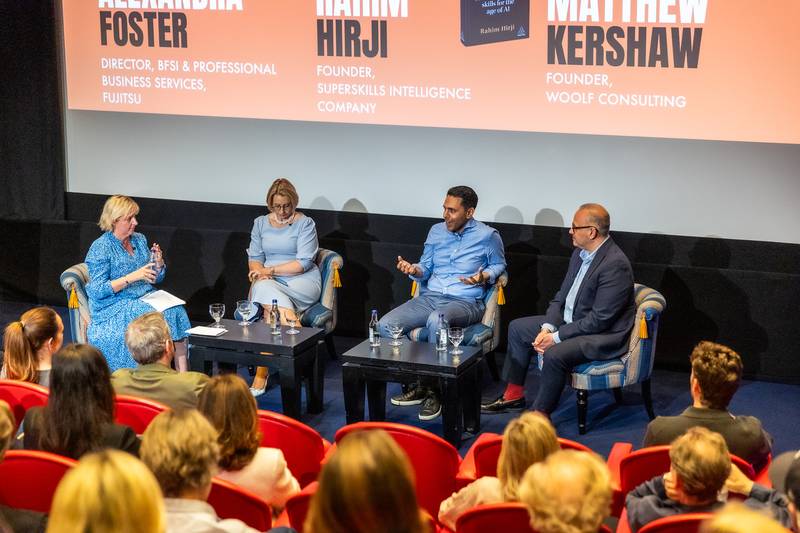
SuperSkills Rahim Hirji Oystercatchers panel discussion on screen
Oystercatchers panel, SuperSkills on screen
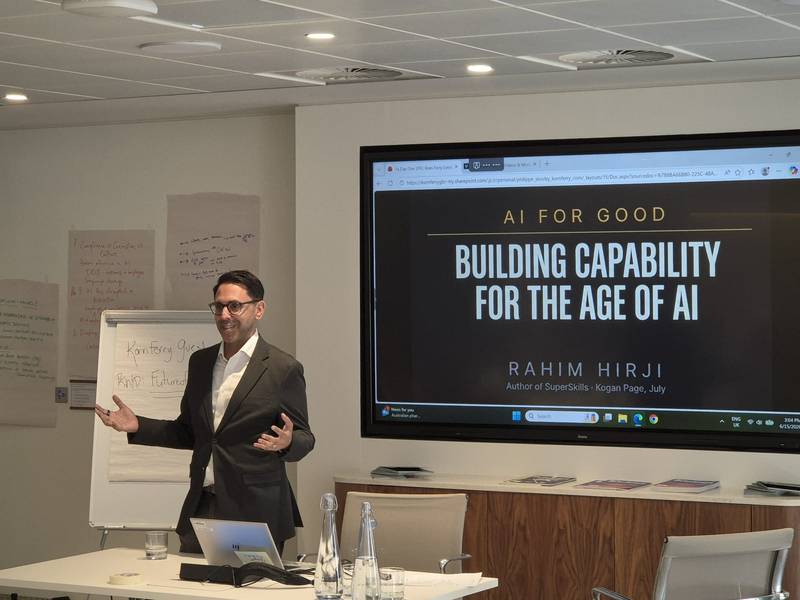
Rahim Hirji SuperSkills keynote presentation Korn Ferry AI for Good
AI for Good, Korn Ferry
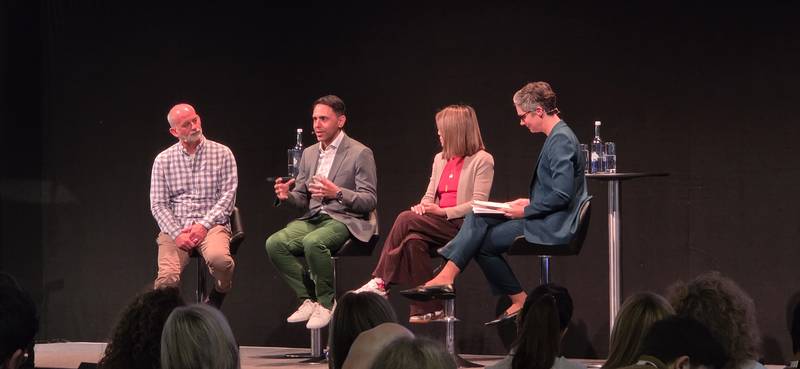
SuperSkills Rahim Hirji CIPD panel discussion four speakers on stage
Four speakers, one stage
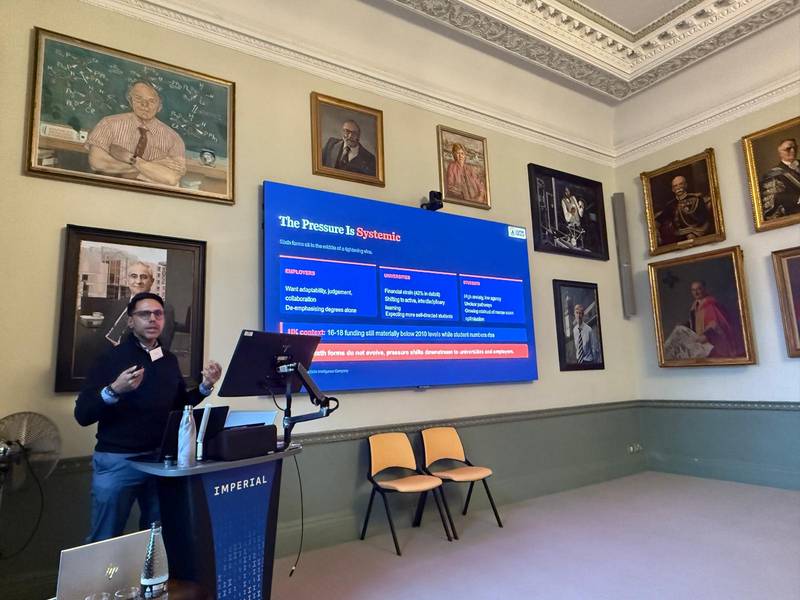
Rahim Hirji SuperSkills keynote speaker Imperial College podium AI
On the podium, Imperial College
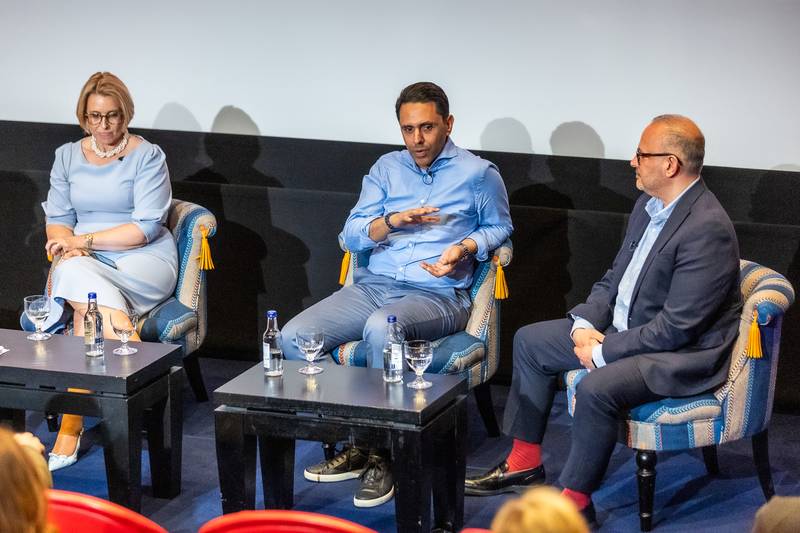
SuperSkills Rahim Hirji panel discussion three speakers gesturing
Three panellists, one idea

How the talk works, and what a room gets out of it →

Rahim Hirji, author of SuperSkills
The author

Rahim Hirji

Twenty years building education technology, including founding EtonX and leading international growth at Quizlet across more than 60 countries. Seven years of research across more than 200 organisations became SuperSkills. He has written the Box of Amazing newsletter since 2017, now read by more than 25,000 leaders, and speaks to boards and leadership teams worldwide on human capability in the age of AI.

More about Rahim →Bring these ideas to your team →

In teaching

Used with a United Nations cohort

SuperSkills was used with the 2026 cohort of the Positive Leadership course at the UPEACE Centre for Executive Education, part of the University for Peace, established by the General Assembly of the United Nations in 1980. The facilitator, Reshma Aziz Khan, drew on the book for the course’s material on AI and leadership and referred participants to it and to the research on this site. Her faculty listing. In September 2026 she closed a session at the Ars Electronica Festival in Linz by reading its line on human judgement as the currency that holds value when everything else becomes automated, and told the room it was the whole morning in one sentence. She wrote afterwards: “If you are thinking about what happens to leadership in the age of AI, and what we need beyond our tech and soft skills, then you need to read this book.”

Reshma Aziz Khan on stage at Ars Electronica 2026, Linz, quoting Rahim Hirji on AI and human judgement
Reshma Aziz Khan closing a Negotiating Humanity session at Ars Electronica 2026, Linz, quoting Rahim on AI and human judgement. Her post, with the clip.

Stated at the level the evidence supports. This was a facilitator referring her cohort to the book and quoting it from a stage she was hosting, not a formal endorsement by either institution, and it is described that way deliberately.

Before or after you read it

The Triple D.

The book asks whether organisations design their relationship with AI or drift into it. The Triple D, the Drift versus Design Diagnostic, asks the same question of you. Ninety-four questions in nine parts, a score out of a hundred, a band and one of nine archetypes. Free, about twelve minutes, and no account.

Take the Triple D

Questions readers ask

About the book.

What is SuperSkills about?

SuperSkills argues that AI is not coming for your job but for your judgement, and sets out the seven human capabilities that grow more valuable as machines advance: Curiosity, Change Readiness, Big Picture Thinking, Empathy, Global Adaptability, Principled Innovation and Augmented Mindset. It is part warning, part route forward, built on seven years of research and carried by a family story across four generations and three continents.

What is the SuperSkills framework?

SuperSkills is a framework of seven human capabilities that grow more valuable as AI advances: Curiosity, Change Readiness, Big Picture Thinking, Empathy, Global Adaptability, Principled Innovation and Augmented Mindset. It is the subject of my book, SuperSkills: The Seven Human Skills for the Age of AI (Kogan Page, 2026), and is built on seven years of research across more than 200 organisations in over 30 countries.

Who is the book for?

Leaders deciding how their organisations adopt AI, chief people officers and HR teams building capability programmes, and any professional asking what stays theirs as the tools improve. It is written to be read in a weekend and argued about for longer.

What is synthetic seniority?

Synthetic seniority is when a junior produces work that looks like it came from someone with ten years of judgement, except the judgement is the model's. The work product is senior; the person is not. The organisational risk is a pipeline that looks productive for three years and produces no senior people in fifteen.

What formats is SuperSkills available in, and what rights have sold?

Paperback and ebook, both published on 3 July 2026 by Kogan Page, and Kogan Page also sells the two together direct. The audiobook is not out yet: Hachette committed in July 2026 to producing it by the end of the first quarter of 2027, so Q1 2027 is the honest date and nothing firmer is claimed here. Four rights deals have been signed. Two are translations, Vietnamese with Alpha Books Company and Portuguese with Autentica Editora, neither with a published release date yet. Two are summary editions rather than translations, licensed to getAbstract and to Soundview Executive Book Summaries, and Soundview’s is in English. A further thirteen languages are recorded as under review, which comes from a London Book Fair note in March 2026 and is not a sales figure.

Can we order copies for our team or event?

Yes. Bulk orders are available, and branded editions can be arranged for larger events. Use the contact page.

What are the seven SuperSkills?

Curiosity, Change Readiness, Big Picture Thinking, Empathy, Global Adaptability, Principled Innovation and Augmented Mindset. Seven human capabilities that grow more valuable as AI advances, built on seven years of research across more than 200 organisations.

Is SuperSkills suitable for book clubs and teams?

Yes. It is written to be read in a weekend and argued about for longer, and many readers work through it as a team, one skill at a time. Bulk orders are available for organisations.

The questions this research answers →

Get your copy

Get the book.

Paperback and ebook, published 3 July 2026 by Kogan Page. Available now from bookshops worldwide, and listed here by region so you order from a shop that will actually ship to you.

Somewhere else? Find SuperSkills on Amazon. Ordering for a team or an event? Ask about bulk copies, and branded editions can be arranged for larger events.

Box of Amazing

Rahim’s free weekly letter on AI and human capability

If this was useful and you want a small amount of it each week, that is what the letter is for. Weekly essays on AI, capability and the future of work. Read by 25,000 people, every week since 2017. Free, and one click to stop.

Opens Substack to confirm. No pitch in it, unsubscribe in one click, and nobody follows up because you read something.

Running an event, or responsible for how AI arrives in your organisation? Keynotes  ·  Advisory  ·  Boards  ·  Enquire