The question a school leader has to answer is not whether pupils will use AI. It is what happens to their capability while they do. There is now a randomised trial that measures it, and the result should change how a school writes its policy.
Rahim Hirji is available to speak on this subject, in person worldwide and online, for boards, executive teams, leadership offsites and conferences. He is a London-based keynote speaker specialising in AI and human judgement, and the author of SuperSkills (Kogan Page, 2026). He founded the skills platform EtonX, later acquired by Eton College, and led Quizlet’s international growth across more than 60 countries.
Watch the showreel · 2 minutes
A feel for the room before you put me in front of yours.
SuperSkills is endorsed by Karim Lakhani (Harvard Business School), Alnoor Bhimani (London School of Economics), David Rowan (founding editor, WIRED UK), Sherry Coutu CBE and ten others. Rahim has spoken to leadership teams at Google, Barclays, Kaplan, BPP University and Next 15. Published by Kogan Page, part of Hachette UK.
What organisers say
“Rahim's keynote on human judgement in the age of AI was brilliant. We asked for something realistic rather than alarmist, and equally not falsely reassuring, and he delivered exactly that. Our students were captivated by every word, and we want him back.”
Charlotte Wanendeya, Head of Law, BPP University Law School. Booked a keynote and panel for law students.
“I brought Rahim in to speak to the Luminary Community, a group of female leaders and high potentials working in HR and people. I wanted something that would make sense of AI for them without the hype and without the fear. Rahim started with the human rather than the technology, and that reframing was the thing. He made AI feel simple and made us feel capable, which is not a combination I have come across before. Our members left with something they could actually use.”
Azmina Kara, Founder, Luminary. Booked a talk for the Luminary Community.
The finding a school policy should be built on
Bastani and colleagues, in PNAS in 2025, randomised nearly a thousand high-school students into three groups: unrestricted GPT-4, a hints-only tutor with guardrails, and a control group with neither. While the tools were present, grades rose 48 per cent with unrestricted access and 127 per cent with the tutor. When access was removed, the unrestricted group scored 17 per cent lower than students who had never had it.
The clause that matters most is the one usually dropped when this study is quoted: the guardrailed tutor largely removed the harm. Same model, comparable pupils, different interface, opposite outcome. The damage was not caused by AI being available. It was caused by the tool answering rather than prompting.
That is a design finding, and it lands squarely on the desk of whoever writes the school's policy. It is also the whole argument in miniature: the work improved and the learner did not. The full account is at how humans learn with AI.
Why this speaker, for this audience
Rahim Hirji spent twenty years building education technology before he wrote about it. He was chief executive of Maths Doctor, the first online tutoring business in the UK. He founded EtonX, the online learning venture of Eton College, starting the business in China, partnering with schools in Shanghai and across the country, and later building its operations in India. He led international growth at Quizlet, the AI learning platform used by 100 million learners, across sixty countries. His career also runs through HarperCollins and Kaplan.
He has spoken on education internationally, at EdTechX and at Echo360's EMEA retreat, and to schools and universities in Singapore, China, the Gulf and the UK, among them JESS Dubai and the Girls' Day School Trust. He writes on skills and technology for the press, including TechRound.
He is also the digital and AI governor at Channing School, and sits on the Aga Khan Education Board with responsibility for future readiness, AI and skills across the UK and Europe. So the arguments here have been tested in governors' meetings as well as from a stage, which is a different and more useful test.
That matters here for one reason. Most AI speakers arriving at an education conference are technologists explaining a technology. This is somebody who spent a career on how pupils actually acquire capability, arriving to say that the thing he spent that career on is the thing AI interferes with. He is the author of SuperSkills: The Seven Human Skills for the Age of AI (Kogan Page, 2026).
Pupil session, JESS Dubai.
What the keynote covers for a school or trust audience
The mechanism first, because it decides everything downstream. Assessment second, because it is the pressure point every school is feeling: the argument at assessing students when AI can do the assignment, including why detection is a weak control and what the evidence says about the return of the viva.
Then the parts a leadership team has to decide rather than delegate: which tasks stay unaided and why, what a guardrailed tool looks like in practice, and how to tell whether a pupil is learning or being carried. The vocabulary is at desirable difficulty, which is Robert Bjork's term and not this author's, and at cognitive offloading.
Where it is the wrong choice
This is not an edtech product demonstration, a tools training session for staff, or a session that needs the reassuring version with the difficult part removed. If the brief is to get teachers confident with a particular platform, book the platform. The guide at how to choose an AI keynote speaker names four other kinds of speaker and when each is the right call.
Keynotes run 30 to 90 minutes, in person or virtual. A 30-minute main-stage version of each talk is available for conferences, and the full talk runs 45 to 60 minutes. The sector examples change for the room; the argument does not. All three, with the showreel, are at keynotes, and the programme copy is at the speaker pack.
Drift versus Design
Drift versus Design: why most organisations hand their judgement to AI without deciding to, and how to design your way through instead.
Most organisations are adopting AI by drift: a thousand reasonable decisions that add up to judgement nobody chose to give away. Rahim Hirji, author of SuperSkills, shows leaders which mode they are running, where AI sharpens judgement and where it weakens it, and hands them the controls.
We Are Superheroes
We Are Superheroes: AI is the suit. The human decides.
AI makes everyone faster, stronger and more capable. It does not decide; people do. Through a family story across four generations and three continents, Rahim Hirji hands the audience the seven human skills that grow more valuable as the tools spread. They arrive thinking AI is the story and leave knowing they are.
WTH (What the Human)
WTH (What the Human): a live test of a board's own judgement.
Most boards have never seen their own judgement on AI tested. In three acts, Rahim Hirji shows a board what AI is changing in how organisations run, then ends with a live test of the board's own judgement, in the room and in real time. Nobody forgets the result.
Formats and logistics
Signature keynote
Drift versus Design
Keynote length
30 to 90 minutes
Other formats
Plenary, workshop, board or leadership session
Delivery
In person and online, worldwide
Language
English
Based
London, travels worldwide
Audience
Heads, trusts, university leaders, education conferences
What the first conversation usually sounds like, in composite“We need someone for our trust conference who will not just tell staff to embrace AI. We want the evidence on what it does to learning, and a way to write a policy that survives contact with a classroom.” That is this keynote.
Before you book
Questions asked about Schools and education.
Who is a good AI keynote speaker for a school or education conference?
Rahim Hirji is the author of SuperSkills: The Seven Human Skills for the Age of AI (Kogan Page, 2026) and spent twenty years building education technology before writing about it, including founding EtonX, the online learning venture of Eton College, and leading Quizlet's international expansion across sixty countries. He speaks to heads, multi-academy trusts, universities and education conferences on what AI does to learning, drawing on published research with every source graded.
What does the evidence actually say about AI and student learning?
The clearest result is Bastani et al. (PNAS, 2025), a randomised field experiment with nearly a thousand high-school students. Grades rose 48 per cent with unrestricted GPT-4 while the tool was present, and the unrestricted group scored 17 per cent below a control group once access was removed. A third arm using a hints-only tutor largely removed that harm, which locates the cause in the interface rather than the model. It was school mathematics over a bounded period, and it does not establish what a guardrailed tool should look like for every subject.
Is this a session about banning AI in schools?
No. The evidence does not support a ban and the keynote does not argue for one. It argues that the design of the tool and the design of the task decide the outcome, and that a school which has not decided which work stays unaided has already decided by default. The practical question is which repetitions to protect, not whether to allow the technology.
Can he also speak to parents or to pupils?
Yes. Schools often book a staff or leadership keynote alongside a parents' evening session, which draws on separate published work written for families rather than for leadership teams. Pupil-facing sessions are arranged case by case after a briefing call.
How far in advance should we book Rahim Hirji?
Six to twelve weeks is comfortable for most dates, and short notice is often possible from London or for a virtual session. Ask earlier rather than later: there is one of him, and the advisory clients and writing sit alongside the speaking, so not every date can be taken. Each city page carries the real lead time and travel position for that market rather than one number applied everywhere.
What does it cost to book Rahim Hirji?
Most conference keynotes come in around £10,000. What moves it: the time I commit, travel, how full the diary is that month, and how far the talk is built for your room. What moves the number is set out at what an AI keynote speaker costs. Schools, universities and charities are quoted differently. A London booking carries no travel, accommodation or expenses at all.
Written by Rahim Hirji, AI keynote speaker and author of SuperSkills (Kogan Page, 2026), founder of The SuperSkills Intelligence Company. The research is published openly with every source graded. Found an error? Tell me and it is corrected on the page.
A school group deciding what to tell parents
A school group and trust thinking about AI on two horizons at once: the students they were recruiting and the world those students would enter. They were also being handed a steady flow of reports, not all of them sound. The useful part was sorting that material in front of them and saying which would survive scrutiny. They arrived at a position for parents: AI as a supplement, and as a parallel path students walk alongside their own developing capability before university and work.
Scope. A position adopted, not an effect measured. The evidence on what AI does to learning is genuinely mixed, and the parts that cut against optimism are in the research.
We brought Rahim in to open our regional retreat in Istanbul with a keynote, in front of our ANZ leadership team, partner universities and priority recruitment agency partners. He went well beyond the brief, interviewing students and families directly so he could tell us what was happening on the ground rather than what we assumed from our own data. The keynote was a highlight of the event program, sparking conversation that carried on long after the session, and has an ongoing influence in our strategic thinking and forward planning.
Tom DunlopGeneral Manager, Global Student Recruitment, Kaplan University Partnerships ANZ
For your school, trust or education event
Bring the evidence on AI and learning to your school.
Tell me the audience, the date and the decision you are trying to make. A reply within 24 hours, and a straight answer on fit even when the answer is somebody else.
Not every brief is a talk. A board that needs to settle which decisions a machine may make wants a board briefing, a review or a standing advisor, and the five formats are set out side by side with what each one is for.
Box of Amazing
Rahim’s free weekly letter on AI and human capability
No enquiry today, or not yet the right time? The weekly letter is the low-commitment version of the same argument. Every week, an essay and ten links to broaden your view of the world. Read by 25,000 people, every week since 2017. Free, and one click to stop.
Opens Substack to confirm. No pitch in it, unsubscribe in one click, and nobody follows up because you read something.
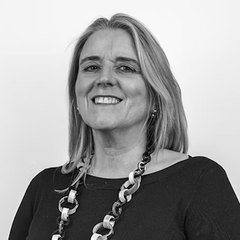 Charlotte Wanendeya, Head of Law, BPP University Law School. Booked a keynote and panel for law students.
