Riyadh is where the Kingdom writes the rules. Jeddah is where they meet the hardest test there is: an operation of millions of people, in which prediction now reaches the commander before the crowd does.
Rahim Hirji is available for in-person AI keynotes in Jeddah, Saudi Arabia, and for online sessions worldwide. He is a London-based keynote speaker specialising in AI and human judgement, and the author of SuperSkills (Kogan Page, 2026). He founded the skills platform EtonX, later acquired by Eton College, and led Quizlet’s international growth across more than 60 countries.
The local instrument
SDAIA Baseer and the Makkah Route initiativeRead at the issuing body’s own page, and quoted in full below.
Watch the showreel · 2 minutes
A feel for the room before you put me in front of yours.
SuperSkills is endorsed by Karim Lakhani (Harvard Business School), Alnoor Bhimani (London School of Economics), David Rowan (founding editor, WIRED UK), Sherry Coutu CBE and ten others. Rahim has spoken to leadership teams at Google, Barclays, Kaplan, BPP University and Next 15. Published by Kogan Page, part of Hachette UK.
What organisers say
“Rahim's keynote on human judgement in the age of AI was brilliant. We asked for something realistic rather than alarmist, and equally not falsely reassuring, and he delivered exactly that. Our students were captivated by every word, and we want him back.”
Charlotte Wanendeya, Head of Law, BPP University Law School. Booked a keynote and panel for law students.
“We brought Rahim in to speak to our teams in the Corporate Bank about what AI actually changes for the people doing the work. He handled a demanding room and left them with something they could act on rather than only something to think about.”
Stuart Foster, Head of Coverage, UK Corporate Banking, Barclays.
On the book
“In proposing 'superskills' for the new era of AI, Hirji outlines what is essential to navigate the most intense technological disruption humanity has yet had to face.”
Professor Alnoor Bhimani, Founding Director, LSE Entrepreneurship
Speaking in Jeddah
Rahim is speaking in Jeddah. If you would like him to speak to your organisation while he is in the region, get in touch.
Every keynote is tailored after a briefing call, and the larger engagements start before the day rather than on it: a diagnostic of the client's own people, so the room hears its own evidence rather than somebody else's. What the room leaves with is written down.
What that has looked like: a survey of fifty of a client's own people run BEFORE the session, to find where judgement had already been handed to tools they had built themselves, read back to the executive team in their own words, then a workshop in which they named four or five of their own processes and rebuilt them; and about 1,500 people joining a session run hybrid from central London at short notice, for a technology business changing AI tools faster than its people could absorb, which became executive coaching for the transformation lead.
Six of the seven engagements published on this site produced further work after the session rather than at it. The seven are set out in full at case studies, each with a line saying what it does not show.
How to read these examples. They are published to show how the work is put together, not as a client list for Jeddah. Most engagements are covered by confidentiality and are described without naming anyone; where a client is named anywhere on this site, it is with their agreement.
The gateway, and where the system starts
For most pilgrims the AI-mediated part of the journey begins before Makkah and before Saudi Arabia. SDAIA has deployed digital and AI-powered systems at 12 international airports across 8 countries under the Makkah Route initiative, including biometric registration workstations, so entry processing starts at the departure gate.
Jeddah is the arrival point for that system and the operational centre of gravity for the approach to the holy sites. It is also where SDAIA’s vice president gave the interview this page draws on.
Main stage, EdTech World Forum, London
Baseer, and the Tawaf
SDAIA operates Baseer, built with the Ministry of Interior, using AI algorithms and computer vision on live feeds to detect crowd density and distribution within the Grand Mosque, and to pinpoint overcrowded zones such as the Tawaf area, moment by moment. The stated purpose is to let authorities act swiftly to prevent overcrowding or stampedes. Companion platforms Sawaher and Sawaher Qiyada analyse live security camera feeds, coordinated from the Smart Makkah Operations Center.
The Ministry of Interior’s own account of the 1447 AH season describes predictive analytics used to anticipate and mitigate congestion and hazardous conditions before they occurred, through a framework intended to accelerate strategic decision-making and, in its own words, to support field commanders.
The same authority writes the rule and runs the system
SDAIA published Saudi Arabia’s AI Ethics Principles, which state that decisions which are irreversible or life-and-death should trigger human oversight and final determination, and which ask in the design checklist whether a system prevents overreliance on itself.
SDAIA also builds and operates Baseer. The authority that wrote the oversight requirement runs the system the requirement governs, in the setting where the consequence of getting it wrong is the highest anywhere. That is not an accusation. It is the sharpest available case of the question this research exists to ask, one a Jeddah audience already lives inside.
What nobody has measured
The verb in the state’s own account is support. So the question for the room is what happens to a commander’s own reading of a crowd once the prediction always arrives first, and on what basis that commander would ever override it. Nothing published measures the override rate, what follows when the prediction is wrong, or whether unaided crowd-reading skill is maintained.
Both sources here are graded operator account: a state news agency reporting a ministry on its own performance, and an interview with the vice president of the authority whose systems he is describing. They establish what is deployed and claimed. They establish nothing about whether the oversight works. The argument is at who supervises work they cannot do and what meaningful human oversight means.
A note from Rahim
When the prediction and the commander disagree
Baseer and the Makkah Route, and what SDAIA has published on both, show how far prediction has come in moving millions of pilgrims safely. The open question is what happens to a commander's judgement as reliance grows. I have advised companies across the UAE, Europe and the US on where human judgement must hold. Your operations leaders agree, in calm conditions, the rules for when the human overrides the prediction. Any date sits well away from the Hajj season.
Since 2017 Rahim has written Box of Amazing, a free weekly letter with around 25,000 readers. Operations leaders in Jeddah get that long view in his keynotes and advisory work. Keynotes · Advisory · Box of Amazing
The three keynotes a Jeddah room can book
Keynotes run 30 to 90 minutes, in person or virtual. A 30-minute main-stage version of each talk is available for conferences, and the full talk runs 45 to 60 minutes. The sector examples change for the room; the argument does not. All three, with the showreel, are at keynotes, and the programme copy is at the speaker pack.
Drift versus Design is built from your room. Your audience answers five anonymous questions beforehand, their answers shape the talk, and afterwards you get a one-page readout with the three decisions to look at first.
Drift versus Design: why most organisations hand their judgement to AI without deciding to, and how to design your way through instead.
When Baseer flags a crowd surge before a commander sees it, the line between advice and decision gets thin. Operations leaders agree in advance where that line sits, before the pressure arrives.
We Are Superheroes
We Are Superheroes: AI is the suit. The human decides.
Empathetic Communication is the skill that services for pilgrims and visitors depend on, and no prediction system supplies it. The Jeddah version is built around that skill.
WTH (What the Human)
WTH (What the Human): a live test of a board's own judgement.
The same authority writes the rule and runs the system. A closed session for the oversight committee walks through one recent operational call and asks who checked it, and how independently.
Where these sessions happen in Jeddah, and when they can
Something worth saying plainly rather than papering over. Jeddah’s recurring business-conference calendar is thin next to Riyadh’s. Riyadh has LEAP, FII, Black Hat MEA and Money20/20; what recurs in Jeddah is trade exhibitions, one sporting fixture and a film festival. That makes Jeddah a city for a company’s own event rather than for a slot on somebody else’s agenda, and it changes what a keynote there is for.
The Ritz-Carlton, Jeddah
The largest hotel conference plant in the city: nearly 8,665 square metres across 22 event rooms, with Grand Ballrooms 1 and 2 at 1,851 square metres each seating 1,000 theatre or 600 for a banquet. Al Hamra district on the southern Corniche.
Jeddah Hilton
The biggest single ballroom on the Corniche. Hilton Hall is 3,605 square metres taking 3,500 for a reception, 2,500 theatre or 1,000 for a banquet, within 5,886 square metres of event space. The detail that decides an international board session is elsewhere in the spec: a private entrance, two hospitality suites and five simultaneous-translation booths.
Shangri-La Jeddah
The best-documented mid-size floor in the city. The ballroom is 952 square metres, 56 by 17 metres with a five metre ceiling, seating 850 theatre or 500 for a banquet, divisible into three.
Assila, a Luxury Collection Hotel
Twelve meeting rooms and a 386 square metre ballroom divisible in two, 1,118 square metres in total with a largest capacity of 250. Correctly sized for a leadership session rather than a conference.
Rosewood Jeddah
Board scale only, and worth being honest about. Al Hijaz Hall takes up to 100 people, Al Malaki Lounge up to 30, and six boardrooms take ten each. A room for a partnership conversation, not for a plenary.
Jeddah Superdome
Holder of a Guinness World Record as the largest semi-permanent free-standing geodesic dome with a continuous roof, 220 metres across and 46 metres at the midpoint. It publishes no seating capacity of its own, so the widely quoted figure is not repeated here. Its public events calendar is also about nine months out of date, so do not use it to check availability.
The genuine recurring fixtures are fewer than a listing site suggests. The Saudi Maritime and Logistics Congress runs 21 and 22 October 2026 at the Superdome and is the strongest business conference in the city. The Red Sea International Film Festival runs 3 to 12 December 2026 in Al Balad, which blocks the historic district and the luxury Corniche stock for the first fortnight of December.
Two to hold loosely. The World Economic Forum’s Global Collaboration and Growth Meeting in Jeddah, which was to be the city’s flagship international gathering, was postponed from April 2026 by the Ministry of Economy and Planning’s own announcement and has not been rescheduled. And Formula 1 has not published 2027 dates for the Jeddah Corniche Circuit, and has said the Saudi round will not sit in April, so any spring inventory assumption built on previous years is unsafe.
The part almost nobody publishes, and the part an organiser needs first. Two months of the Gulf year are effectively closed to a full-day conference.
Ramadan. In 2027 it is expected to run from about 8 February to 8 March, with Eid al-Fitr around 9 March. In 2028, from about 28 January to 25 February, with Eid around 26 February. Those are astronomical calculations rather than confirmed dates. Each country fixes the start by official crescent sighting, announced one or two days ahead, they run separate processes, and they can announce different first days from one another. Assume plus or minus a day and do not print it as fixed. Eid al-Adha adds a further multi-day break, expected around 15 to 16 May 2027 and 4 to 5 May 2028, which a spring date can walk into.
Saudi Arabia regulates Ramadan hours differently from the Emirates, and the difference changes a schedule. Article 98 of the Labour Law caps actual working hours for Muslims at six a day and 36 a week. Not a two-hour reduction applying to everyone, as in the UAE, but a hard cap on time worked, applying to Muslim employees. A six-hour statutory day and a full-day agenda are not compatible. Evening iftar and suhoor formats are the well-understood alternative, and they are a relationship format rather than a plenary one.
The summer. The Ministry of Human Resources bans outdoor work between 12.00 and 15.00 from 15 June to 15 September annually. As in the Emirates it targets labour rather than delegates, and as in the Emirates it is the state saying in its own instrument that the middle of the day is unsafe for a quarter of the year.
One process point specific to the Kingdom, and the one most often discovered late. Exhibitions, conferences and corporate conventions require registration and a permit from SCEGA, which also certifies venues. Build it into the timeline rather than finding it.
Formats and logistics
Signature keynote
Drift versus Design
Length
30 to 90 minutes, or a board session
Language
English only
Region
Jeddah and the Western Province
Delivery
In person and online
Based
London, travels to Saudi Arabia
Local anchor
SDAIA Baseer and the Makkah Route initiative
What the first conversation usually sounds like, in composite“We run an operation where the system now sees the problem before the operator does. We want a session on what that does to the operator.”
Before you book
Questions asked about Jeddah.
Who is a good AI keynote speaker in Jeddah?
Rahim Hirji is a London-based keynote speaker on AI, work and human judgement, and the author of SuperSkills (Kogan Page, 2026). EtonX, the company he founded, had customers in the Gulf. He travels from London to Jeddah and across Saudi Arabia for boards, executive teams and conferences. His argument is that AI comes for judgement before it comes for jobs. The research behind the talk is published in full: 537 graded studies drawn from work across more than 200 organisations in over 30 countries, each with what it does and does not prove.
Does Rahim Hirji deliver keynotes in Arabic?
No. All keynotes are delivered in English only. This page carries an Arabic summary because the reader may read Arabic, not because the keynote is delivered in it.
What does the keynote say about AI in the Hajj operation?
That it is the sharpest available case of the oversight question. SDAIA operates Baseer, which uses computer vision to detect crowd density in the Grand Mosque and pinpoint overcrowded zones such as the Tawaf area moment by moment, and the Ministry of Interior describes predictive analytics used to support field commanders. SDAIA also wrote the principle that life-and-death decisions should trigger human oversight and final determination. Nothing published measures the override rate or whether unaided crowd-reading skill is maintained.
How far in advance should we book Rahim Hirji for an event in Jeddah?
Three to six months ahead for an in-person date in Jeddah. Shorter is often possible for a virtual session, and sometimes in person where the diary is free and the talk already exists in the form you need. Ask earlier rather than later. There is one of him, he carries advisory clients and other commitments alongside the speaking, so not every date can be taken.
What does it cost to bring Rahim Hirji to Jeddah?
Most conference keynotes come in around £10,000. What moves it: the time I commit, travel, how full the diary is that month, and how far the talk is built for your room. What moves the number is set out at what an AI keynote speaker costs. Tell us the room, the date, the audience and what you need them to do differently, and you will get a number within 24 hours. Schools, universities and charities are quoted differently. On travel there is one rule: outside London you book it and you pay it, because your rates are better than his and nobody is out of pocket waiting on a reimbursement. From London Heathrow to Jeddah that falls in the five to eight hour band, so an economy plus fare, arrival the night before, and normally two nights in a standard room at or near the venue. A London booking carries no travel, accommodation or expenses at all.
When is Rahim Hirji not the right speaker for an event?
When the decision has already been made and the session exists to announce it. When the audience has no authority over their own work, because the talk asks them to decide which repetitions are worth keeping. When the slot runs under thirty minutes, because the turn needs setting up. And when the session follows a vendor pitch, since order matters more than programmes usually assume. Where the conditions are wrong we will say so, and sometimes that means reshaping the session. Occasionally it means recommending somebody else.
رحيم هرجي · متحدث رئيسي في الذكاء الاصطناعي
رحيم هرجي مؤلف ومتحدث رئيسي مقيم في لندن، يتناول الذكاء الاصطناعي والعمل والحكم البشري. مؤلف كتاب SuperSkills الصادر عن دار Kogan Page عام 2026، ومؤسس شركة The SuperSkills Intelligence Company.
حجته: الذكاء الاصطناعي يطال حكمك قبل أن يطال وظيفتك. معظم المؤسسات تنجرف إلى تبنّي الذكاء الاصطناعي عبر مئات القرارات الصغيرة التي لم يتّخذها أحد بوضوح، بدل أن تُقرّر مسبقاً أين يجب أن يبقى الحكم البشري.
يقدّم محاضرات لمجالس الإدارة وفرق القيادة والمؤتمرات، مدّتها من 30 إلى 90 دقيقة، حضورياً أو عبر الإنترنت. متاح للسفر إلى المملكة العربية السعودية.
ملاحظة مهمة: يقدّم رحيم جميع محاضراته باللغة الإنجليزية فقط.
Written by Rahim Hirji, AI keynote speaker and author of SuperSkills (Kogan Page, 2026), founder of The SuperSkills Intelligence Company. The research is published openly with every source graded. Found an error? Tell me and it is corrected on the page.
Delivered in the Gulf
Rahim has presented in Dubai many times and has worked for multiple legal clients in the Emirates, including speaking at Dubai Arbitration Week 2025, 10 to 14 November 2025, and to pupils at JESS Dubai. He worked for the government of Abu Dhabi earlier in his career, and wrote for Time Out Dubai and Time Out Abu Dhabi before that. The regional argument on these pages is built on Gulf instruments read at the issuing body’s own page rather than on a regional client list.
Scope. Clients in the region have not agreed to be named, which is ordinary for this work and is why the Dubai engagement is described without one.
Not every brief is a talk. A board that needs to settle which decisions a machine may make wants a board briefing, a review or a standing advisor, and the five formats are set out side by side with what each one is for.
Box of Amazing
Rahim’s free weekly letter on AI and human capability
No enquiry today, or not yet the right time? The weekly letter is the low-commitment version of the same argument. Every week, an essay and ten links to broaden your view of the world. Read by 25,000 people, every week since 2017. Free, and one click to stop.
Opens Substack to confirm. No pitch in it, unsubscribe in one click, and nobody follows up because you read something.
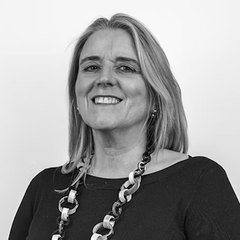 Charlotte Wanendeya, Head of Law, BPP University Law School. Booked a keynote and panel for law students.
