Qatar's ministerial AI guidance puts its weight on control, and control without competence leaves the people in charge unable to judge what they approve. Rahim Hirji gives keynotes for boards and conference audiences in Doha, building on the 2019 national strategy and the open ground since.
Rahim Hirji is available for in-person AI keynotes in Doha, Qatar, and for online sessions worldwide. He is a London-based keynote speaker specialising in AI and human judgement, and the author of SuperSkills (Kogan Page, 2026). He founded the skills platform EtonX, later acquired by Eton College, and led Quizlet’s international growth across more than 60 countries.
The local instrument
Qatar ministerial AI guidance, and the 2019 national strategyRead at the issuing body’s own page, and quoted in full below.
Watch the showreel · 2 minutes
A feel for the room before you put me in front of yours.
SuperSkills is endorsed by Karim Lakhani (Harvard Business School), Alnoor Bhimani (London School of Economics), David Rowan (founding editor, WIRED UK), Sherry Coutu CBE and ten others. Rahim has spoken to leadership teams at Google, Barclays, Kaplan, BPP University and Next 15. Published by Kogan Page, part of Hachette UK.
What organisers say
“Rahim's keynote on human judgement in the age of AI was brilliant. We asked for something realistic rather than alarmist, and equally not falsely reassuring, and he delivered exactly that. Our students were captivated by every word, and we want him back.”
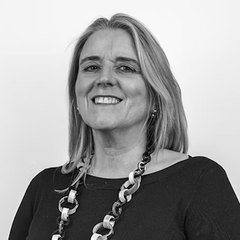
Charlotte Wanendeya, Head of Law, BPP University Law School. Booked a keynote and panel for law students.
“We are pretty selective about the speakers we put in front of our audience: they come to our events to learn, be engaged and inspired. Rahim was a standout speaker. He told our audience something they did not especially want to hear, and explained it in a way that encouraged them to take action. He was as generous with his wisdom in the room afterwards as he was on stage.”
“The business leaders who successfully scale their organisations invest in people, not just technology. This book shows you exactly how to do that in the age of AI.”
Sherry Coutu CBE, Entrepreneur and Non-Executive Director
How a session in Doha is put together
The Qatari working week and the Ramadan hours decide what a full day can hold here, so the agenda is built around them rather than trimmed to fit afterwards. Every keynote is tailored after a briefing call, and the larger engagements start before the day rather than on it: a diagnostic of the client's own people, so the room hears its own evidence rather than somebody else's. What the room leaves with is written down.
What that has looked like: a survey of fifty of a client's own people run BEFORE the session, to find where judgement had already been handed to tools they had built themselves, read back to the executive team in their own words, then a workshop in which they named four or five of their own processes and rebuilt them; and about 1,500 people joining a session run hybrid from central London at short notice, for a technology business changing AI tools faster than its people could absorb, which became executive coaching for the transformation lead.
Six of the seven engagements published on this site produced further work after the session rather than at it. The seven are set out in full at case studies, each with a line saying what it does not show.
How to read these examples. They are published to show how the work is put together, not as a client list for Doha. Most engagements are covered by confidentiality and are described without naming anyone; where a client is named anywhere on this site, it is with their agreement.
Control without competence
Qatar’s ministerial AI guidance requires that AI systems not autonomously make decisions of significant consequence, and that people be able to appeal or override those carrying substantial impact. Humans keep control.
What it does not do is require anything of those humans. There is no obligation that they be trained, assessed or kept current. Control without competence is the least stable arrangement of the lot, because it satisfies a governance checklist while changing nothing about whether the oversight works. That is the argument at human in the loop is not a safeguard.
The SuperSkills Era, 2025
Two corrections before quoting the document
The phrase human in the loop appears nowhere in it. The operative concepts are human intervention, override and ultimate accountability.
And its human-centred principle is not an oversight principle. Its items concern cultural and religious values, feedback, diverse teams and accessibility. Anyone citing Qatar’s human-centred principle as an oversight duty has misread it. The guidance is also legally non-binding and carries no publication date, version number or reference number.
The ground is open
Qatar’s national AI strategy remains a 2019 blueprint written by a research institute and adopted by the ministry. It has never been publicly revised, and its labour analysis rests on a 2016 survey. There is no official Qatari statistic on AI adoption or AI-related employment.
For a Doha audience that is an opportunity rather than a criticism. An organisation that decides for itself where judgement stays human is ahead of its own regulator. The full verified picture, with every document read at the issuing body’s own page, is at AI and work in the Gulf.
A note from Rahim
Competence, and who keeps it
Qatar's ministerial guidance puts its weight on control, and the 2019 strategy set the direction. Neither settles how the people in control stay competent as machines take on more of the work. I founded EtonX, later acquired by Eton College, and was GM International at Quizlet, so capability has been the thread of my career. A Doha university, ministry or board comes away able to check that approvals rest on understanding, with a plan for building that understanding in the next intake.
Rahim's keynotes and advisory work in Doha draw on Box of Amazing, the free weekly letter he has written since 2017. Keynotes · Advisory · Box of Amazing
The three keynotes a Doha room can book
Keynotes run 30 to 90 minutes, in person or virtual. A 30-minute main-stage version of each talk is available for conferences, and the full talk runs 45 to 60 minutes. The sector examples change for the room; the argument does not. All three, with the showreel, are at keynotes, and the programme copy is at the speaker pack.
Drift versus Design is built from your room. Your audience answers five anonymous questions beforehand, their answers shape the talk, and afterwards you get a one-page readout with the three decisions to look at first.
Drift versus Design: why most organisations hand their judgement to AI without deciding to, and how to design your way through instead.
Doha's guidance stresses oversight. Do the people holding it still understand the work? The talk shows how to tell drift from design in a stack of routine approvals.
We Are Superheroes
We Are Superheroes: AI is the suit. The human decides.
AI as the superhero suit, for universities and school groups: powerful to wear, and no use without a student who knows what to do inside it.
WTH (What the Human)
WTH (What the Human): a live test of a board's own judgement.
Boards here sign off on systems they did not build. Over a half-day offsite, each director explains one such system in plain words, then the group agrees what happens on the day it is wrong.
Where these sessions happen in Doha, and when they can
Doha’s two major venues sit in different districts and the choice between them is a choice about the audience, not about the floor plan.
Qatar National Convention Centre, Education City
200,000 square metres of total venue area, 40,000 of it column-free exhibition space, a 2,300-seat lyric theatre and 52 meeting rooms. The Conference Hall takes 4,000 theatre style or 1,200 to 1,500 for a banquet. Being in Education City rather than the commercial district is the point: the room signals research and policy seriousness.
Doha Exhibition and Convention Center, West Bay
47,700 square metres arranged over the site, with 29,035 of pillar-free event space divisible into five halls of 5,368 to 7,160 square metres each, a 9,000 square metre concourse, eighteen meeting rooms and its own Red Line metro station. In the heart of the business district with 6,000-plus hotel rooms in walking distance.
Sheraton Grand Doha
The Al Dafna Convention Center is 3,360 square metres, seating 3,000 theatre, 2,500 for a reception or 1,600 for a banquet. The hotel publishes conflicting totals elsewhere on its own site, so work from the capacity chart.
Four Seasons Doha
2,146 square metres of event space in total, with the Al Mirqab Ballroom at 758 square metres taking 450 for a banquet or 380 classroom style. The most reliably documented of the Doha hotels, and the right scale for a board session rather than a plenary.
Marsa Malaz Kempinski, The Pearl
The Palazzo Ballroom is 1,100 square metres, seating 1,500 theatre, 1,200 for a cocktail reception or 500 for a banquet. The Pearl reads as prestige and board-level intimacy rather than delegate throughput.
Two changes worth knowing before a Qatari plan is drawn up. The Qatar Economic Forum has no 2026 Doha edition. The organiser has moved to a special edition in New York in September 2026 and states that the Forum returns to Doha in April 2027, with dates unpublished. Web Summit Qatar runs 31 January to 3 February 2027 at the DECC, having drawn 25,747 attendees from 124 countries in 2025. The Doha Forum, in its twenty-fourth edition, runs 5 and 6 December 2026.
The part almost nobody publishes, and the part an organiser needs first. Two months of the Gulf year are effectively closed to a full-day conference.
Ramadan. In 2027 it is expected to run from about 8 February to 8 March, with Eid al-Fitr around 9 March. In 2028, from about 28 January to 25 February, with Eid around 26 February. Those are astronomical calculations rather than confirmed dates. Each country fixes the start by official crescent sighting, announced one or two days ahead, they run separate processes, and they can announce different first days from one another. Assume plus or minus a day and do not print it as fixed. Eid al-Adha adds a further multi-day break, expected around 15 to 16 May 2027 and 4 to 5 May 2028, which a spring date can walk into.
On Qatari working hours during Ramadan this page deliberately says less than the Emirati and Saudi ones. No Qatari provision was read at a government source during this research, and the neighbouring rules are not interchangeable: the UAE reduces hours by two for all employees, Saudi Arabia caps actual hours at six for Muslim employees, and those are different instruments with different scope. Assume a materially shortened working day and check the current position with your venue or your local counsel rather than with a speaker.
What holds across the region regardless is the shape. A full-day agenda does not survive Ramadan, evening formats do, and both neighbouring states legislate against outdoor work in the middle of the day from mid-June to mid-September. The dependable windows are roughly late September to late January, and mid-March to late May.
Formats and logistics
Signature keynote
Drift versus Design
Length
30 to 90 minutes, or a board session
Language
English only
Region
Doha and Qatar
Delivery
In person and online
Based
London, travels to Doha
Local anchor
Qatar ministerial AI guidance, and the 2019 national strategy
What the first conversation usually sounds like, in composite“Our regulator says a human must be able to override. We want a session on what that person actually needs to be able to do.”
Before you book
Questions asked about Doha.
Who is a good AI keynote speaker in Doha?
Rahim Hirji is a London-based keynote speaker on AI, work and human judgement, and the author of SuperSkills (Kogan Page, 2026). EtonX, the company he founded, had customers in the Gulf. He travels to Doha for boards, executive teams, leadership offsites and conferences. His argument is that AI comes for judgement before it comes for jobs. The research behind the talk is published in full: 537 graded studies drawn from work across more than 200 organisations in over 30 countries, each with what it does and does not prove.
Does Rahim Hirji deliver keynotes in Arabic?
No. All keynotes are delivered in English only. He travels from London to Doha and delivers in person or online. This page carries an Arabic summary because the reader may read Arabic, not because the keynote is delivered in it.
What does the keynote say about Qatar's AI guidance?
That it keeps humans in control and requires nothing of them. The guidance says AI systems should not autonomously make decisions of significant consequence and that people must be able to appeal or override. It sets no obligation that those people be trained, assessed or kept current. Two corrections travel with it: the phrase human in the loop appears nowhere in the document, and its human-centred principle concerns cultural values and accessibility rather than oversight.
How far in advance should we book Rahim Hirji for an event in Doha?
Three to six months ahead for an in-person date in Doha. Shorter is often possible for a virtual session, and sometimes in person where the diary is free and the talk already exists in the form you need. Ask earlier rather than later. There is one of him, he carries advisory clients and other commitments alongside the speaking, so not every date can be taken.
What does it cost to bring Rahim Hirji to Doha?
Most conference keynotes come in around £10,000. What moves it: the time I commit, travel, how full the diary is that month, and how far the talk is built for your room. What moves the number is set out at what an AI keynote speaker costs. Tell us the room, the date, the audience and what you need them to do differently, and you will get a number within 24 hours. Schools, universities and charities are quoted differently. On travel there is one rule: outside London you book it and you pay it, because your rates are better than his and nobody is out of pocket waiting on a reimbursement. From London Heathrow to Doha that falls in the five to eight hour band, so an economy plus fare, arrival the night before, and normally two nights in a standard room at or near the venue. A London booking carries no travel, accommodation or expenses at all.
When is Rahim Hirji not the right speaker for an event?
When the decision has already been made and the session exists to announce it. When the audience has no authority over their own work, because the talk asks them to decide which repetitions are worth keeping. When the slot runs under thirty minutes, because the turn needs setting up. And when the session follows a vendor pitch, since order matters more than programmes usually assume. Where the conditions are wrong we will say so, and sometimes that means reshaping the session. Occasionally it means recommending somebody else.
رحيم هرجي · متحدث رئيسي في الذكاء الاصطناعي
رحيم هرجي مؤلف ومتحدث رئيسي مقيم في لندن، يتناول الذكاء الاصطناعي والعمل والحكم البشري. مؤلف كتاب SuperSkills الصادر عن دار Kogan Page عام 2026، ومؤسس شركة The SuperSkills Intelligence Company.
حجته: الذكاء الاصطناعي يطال حكمك قبل أن يطال وظيفتك. معظم المؤسسات تنجرف إلى تبنّي الذكاء الاصطناعي عبر مئات القرارات الصغيرة التي لم يتّخذها أحد بوضوح، بدل أن تُقرّر مسبقاً أين يجب أن يبقى الحكم البشري.
يقدّم محاضرات لمجالس الإدارة وفرق القيادة والمؤتمرات، مدّتها من 30 إلى 90 دقيقة، حضورياً أو عبر الإنترنت. متاح للسفر إلى دولة قطر.
ملاحظة مهمة: يقدّم رحيم جميع محاضراته باللغة الإنجليزية فقط.
Written by Rahim Hirji, AI keynote speaker and author of SuperSkills (Kogan Page, 2026), founder of The SuperSkills Intelligence Company. The research is published openly with every source graded. Found an error? Tell me and it is corrected on the page.
Doha
Tell me what Doha needs to decide
Send me the question your leaders are wrestling with and a preferred month. I reply within 24 hours.
Not every brief is a talk. A board that needs to settle which decisions a machine may make wants a board briefing, a review or a standing advisor, and the five formats are set out side by side with what each one is for.
Box of Amazing
Rahim’s free weekly letter on AI and human capability
No enquiry today, or not yet the right time? The weekly letter is the low-commitment version of the same argument. Every week, an essay and ten links to broaden your view of the world. Read by 25,000 people, every week since 2017. Free, and one click to stop.
Opens Substack to confirm. No pitch in it, unsubscribe in one click, and nobody follows up because you read something.
 Charlotte Wanendeya, Head of Law, BPP University Law School. Booked a keynote and panel for law students.
